
A BIRTHDAY HOMAGE TO PAUL ROBESON!
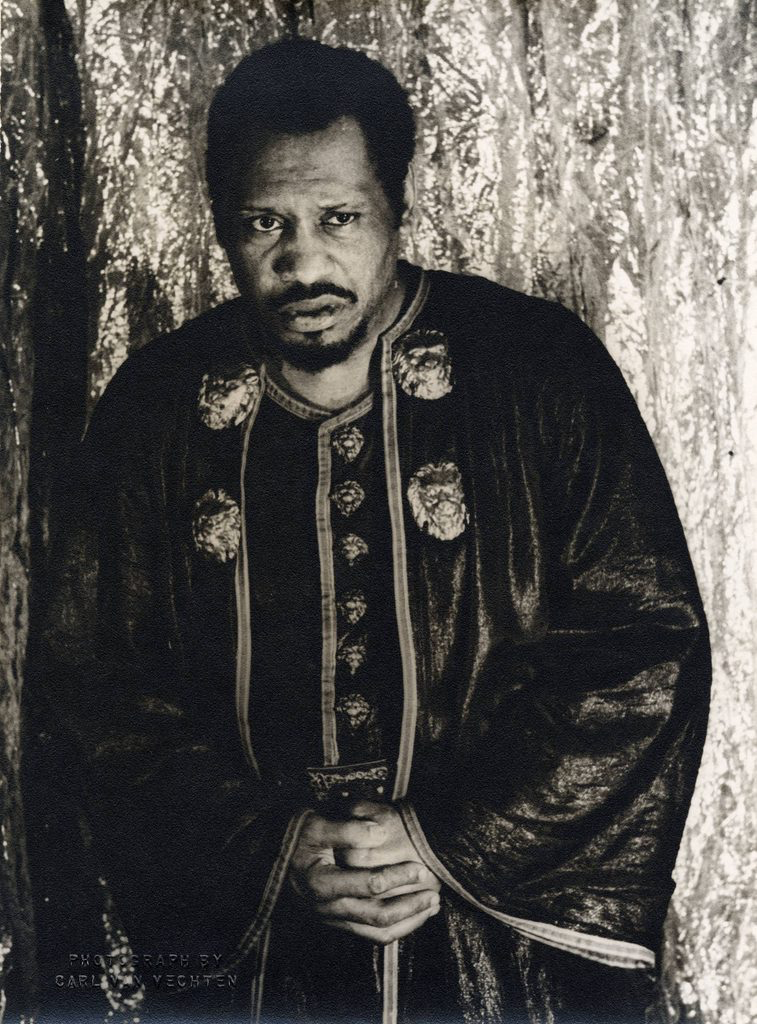
Paul Robeson as Othello by Carl Van Vechten
Dear F/friends, In recognition of Quaker-descendent Paul Robeson’s 128th birthday, the BlackQuakerProject offers a personal statement from Friend Harold D. Weaver Jr., reflecting on the extraordinary achievements, humanism, and self-sacrifice that defined Robeson’s life as well as the razing of his career during the cultural stranglehold of McCarthyism and the Red Scare. We further wish to share an accounting of Professor Weaver’s decades-long efforts to restore Robeson to his rightful place in world history and a directory you can use to explore the many fruits of this advocacy.
A personal statement from Dr. Harold D. Weaver Jr.
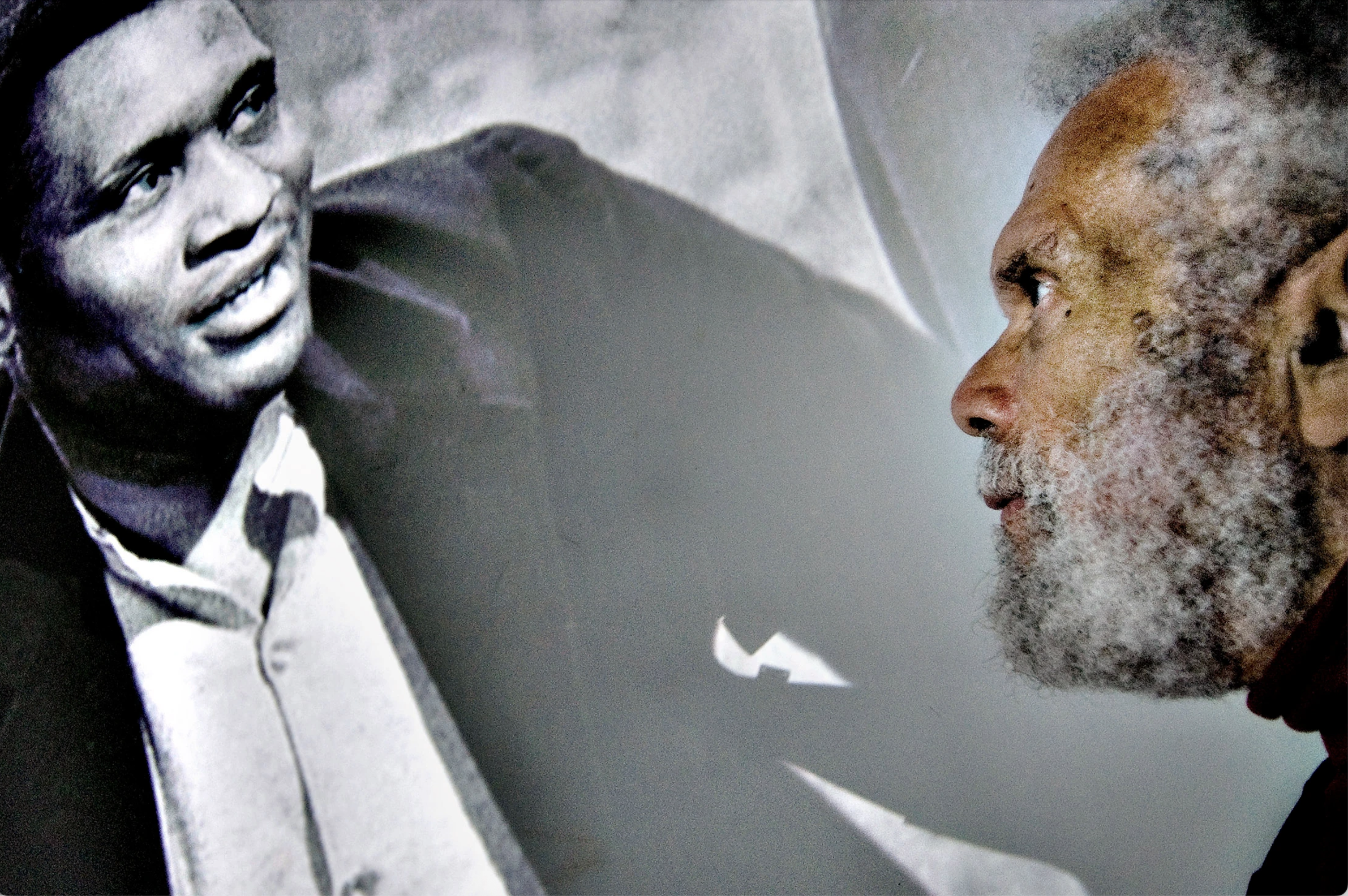
Dr. Weaver Lectures on Robeson at the Nordic Arts School, Kokkola, Finland, 2008.
Paul Robeson lived during the same period—1898-1976—as did my father, college professor Dr. Harold D. Weaver Sr. This was a time in USA history when African-descendant folks suffered as we imagine hell to be. Besides my family, I have no greater respect for any American who ever lived than this renaissance man, who never bowed to injustice even “one-thousandth part of an inch.”
Robeson was directly descended from over 250 years of Quakers in England and the British colony in North America. This included the first mayor of Philadelphia, European-American Humphrey Moray, during the rule of William Penn, the Quaker founder of Pennsylvania (1681 charter from England’s King Charles II). This also included prominent ancestors of African descent: celebrated educators Grace Bustill Douglass (c. 1782-1842) and her daughter, Sarah Mapps Douglass (1806-1882), who were both relegated to the back bench of their Arch Street Friends meetinghouse in Philadelphia despite their commitment and contributions to Quakerism and to the improvement of health and women’s rights.
Growing up in Princeton, New Jersey, Robeson was the son of previously enslaved Rev. William Drew Robeson, the minister of the Witherspoon Street Presbyterian Church in Princeton. The crucial advice of his father—(1) to attain the highest possible, (2) to pursue only worthwhile goals, and (3) to remain loyal to his convictions—would influence Robeson to achieve near perfection in almost everything he set out to do, as well as the moral commitment to follow his beliefs without compromise. Unfortunately, his Quaker mother, Maria Louisa Bustill Robeson, a school teacher, died in a house fire before young Paul entered primary school. Sadly, he had no memory of her. We can only imagine the impact of her genes and 250 years of direct Quaker ancestry on this incredible overachiever in so many areas of life.
At Rutgers University, Robeson had a legendary academic and non-academic career, graduating in 1919 as a 2-year Phi Beta Kappa member, class valedictorian, four-letter athlete, 2-year All-American football star, and winner of every university oratorical contest for which he was eligible. Though he was a member of the Rutgers Glee Club, his African heritage prevented his participation in off-campus concerts. His collegiate achievements served as a preamble to the future world-renowned artist of screen, stage, music, and recordings. He starred in twelve films, performed in concert halls across the globe, and touched the hearts of people around the world with his recordings. Especially notable were his pioneering stage performance of Othello and his recordings singing “Ol’ Man River,” the lyrics of which he changed significantly as his politics—and the world’s politics—changed.
A revolutionary humanist and influential Pan-Africanist, Robeson was committed to Black liberation and dignity worldwide. At great personal cost, he connected the liberation struggle of Africans, African Americans, and the people of the Caribbean in condemning Western imperialism. Trinidadian scholar-activist-playwright C.L.R. James, Chilean poet-diplomat Pablo Neruda, and anti-colonial Tanzanian president Julius Nyerere were among those respected international figures who called him a friend and praised his artistic commitment to justice and freedom around the world. He was also a confidant of USSR political leader Nikita Khrushchev. The USA government, economic institutions, cultural czars, and media united to take away his livelihood, to seize his passport for eight years (1950-1958), to institute an industry boycott of his records, and to bar him from concert halls. Is that not totalitarianism, exemplifying the unity and collaboration of the political, economic, and cultural? Robeson was never even allowed to appear on television—a total “white-out.”
Pioneering Advocacy Activities of Prof. Weaver on Behalf of Paul Robeson, Rutgers University, 1970-74: Honorary Doctorate, Course, Film Festival-Symposium, Film, and Publications.
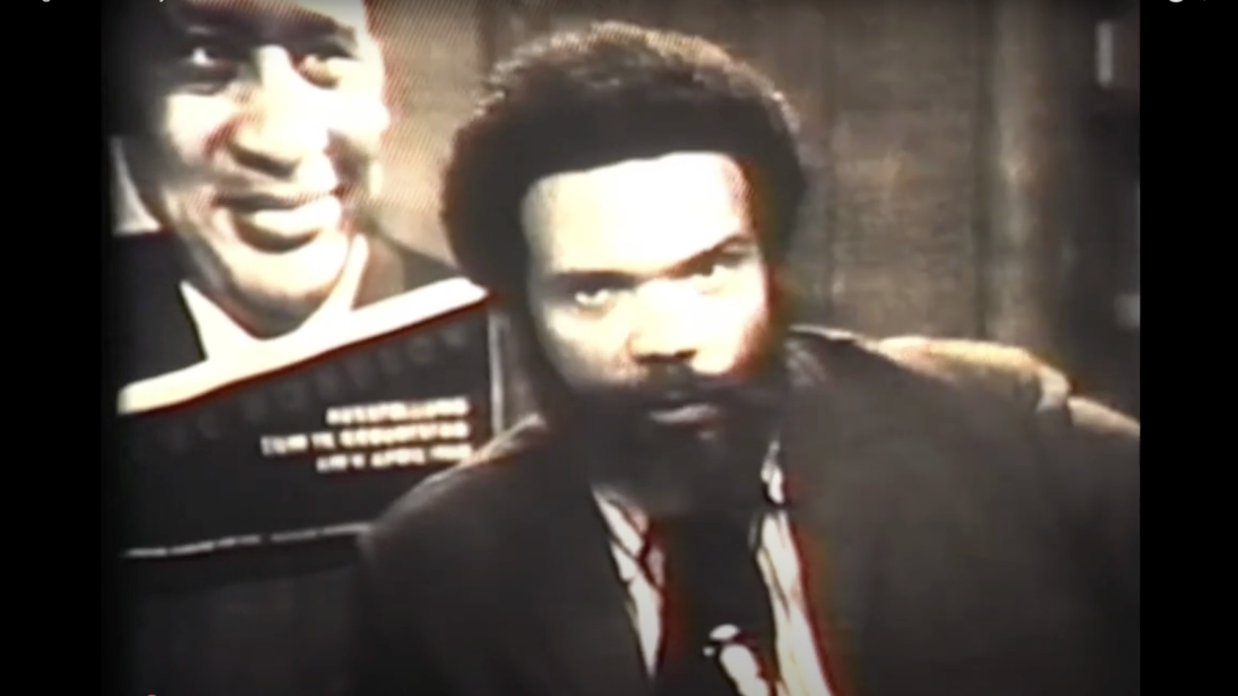
Professor Weaver Presenting His Paul Robeson Film at Rutgers University, 1972
When Weaver arrived at Rutgers from the Université de Paris VIII-Vincennes/St. Denis in September 1970 to head and create a new program in Afro-American and African Studies, he found that not a single student in the first class of the introductory course had ever heard of Paul Robeson even though most were African Americans from New Jersey. He felt a mission to correct that. Over the next three and a half years, he worked to return Robeson to his rightful place in Rutgers, USA, and world history. In May 1971, Pete Seeger, Ossie Davis, Paul Robeson Jr., and Weaver broke the nationwide TV silence on Robeson, appearing as panelists in the Emmy-award-winning, 3-part PBS (then National Education Television) series, New Jersey Speaks: A Tribute to Paul Robeson. The following year, he taught the first course in the world on Robeson, Black Biography and the Times: Paul Robeson, for which he produced and narrated the educational short film, “Paul Robeson: Identity, Political Economy, and Communications,” which also became the synthesizing, closing theme of the new introductory course, assuring that all students studying Africana Studies at Rutgers College were exposed to Mr. Robeson. In April 1973, to celebrate Robeson’s 75th birthday, Weaver organized the first USA Paul Robeson Symposium and Film Festival, with funding from the National Endowment for the Arts, Johnson and Johnson International, and the university. This week-long celebration began with a keynote address from the great Trinidadian scholar, playwright, and political activist, C.L.R. James, and presentations by other major Robeson scholars and activists. This advocacy culminated in Weaver’s initiation of the action that led to the university’s awarding Robeson an honorary Doctor of Humane Letters in April 1973. Later that fall, he organized a panel on Robeson for the annual conference of the Association for the Study of African American Life and History in New York, during which he also screened two films in a Robeson mini-film festival. In December 1973/January 1974, Weaver published two articles on his role model–”Paul Robeson and Film: Racism and Anti-Racism in Communications” in The Negro History Bulletin and “Paul Robeson: Beleaguered Leader” in The Black Scholar (reprinted with some changes in Jacobin magazine in June 2021).
Conclusion
In the decades since his resignation from Rutgers in February 1974, Dr. Weaver has continued to organize film festivals and symposia screening Robeson’s work and to lecture on Robeson at universities and other non-formal educational institutions in China, Mexico, Finland, Taiwan, Canada, and the USA, including Beijing University, Beijing Foreign Studies University, Universite’ Laval, University of Toronto, Harvard University, Virginia Union University, Princeton University, Talladega College, Yale University, Centro Intercultural de Documentación (CIDOC) (Cuernavaca, Mexico), and the Nordic Arts Institute (Kokkola, Finland).
A Partial List of Resources by and from Harold D. Weaver Jr.
- “Paul Robeson: Beleaguered Leader,” The Black Scholar (1973).
- “Paul Robeson and The Pan-African World,” Présence Africaine (1978)
- Paul Robeson: Identity, Political Economy, and Communications, Rutgers University, (1972).
- The 2022 and 2023 Black Quaker Lives Matter Film Festival & Forum:
- “Paul Robeson & His 200 Years of USA Quaker Ancestors” featuring Joyce Mosley, Mark Solomon, and Harold D. Weaver Jr. (hosted over Zoom and in-person at the Coolidge Corner Theater in Brookline, Massachusetts).
- “Paul Robeson 125th Birthday Celebration” featuring Dr. Gerald Horne, Dr. Charles Musser, and Dr. Harold D. Weaver.
- 50 Years of Advocacy for and Research on Paul Robeson” (an educational video Produced by the BlackQuaker Project).
What are your feelings and thoughts about Paul Robeson? We invite you to write to us with your responses at theblackquakerproject@gmail.com.
Peace and Blessings,
The BlackQuaker Project
Wellesley Friends Meeting,
New England Yearly Meeting of Friends (Quakers)
9 April 2026
 Friends Association for Higher Education